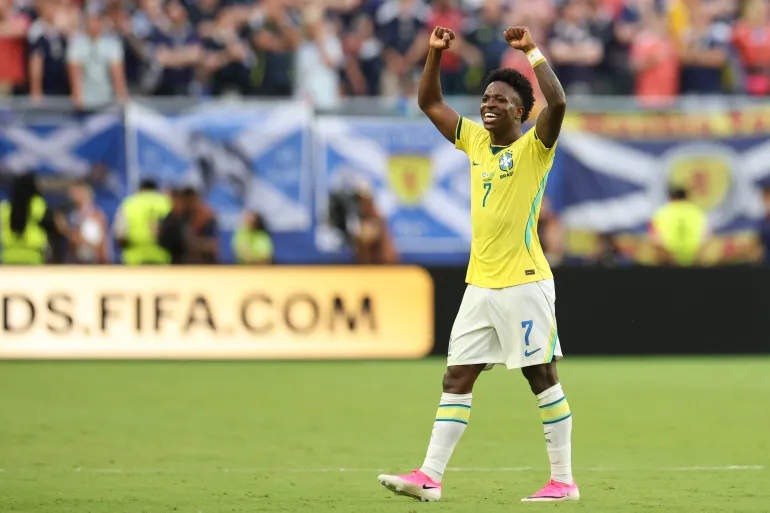
Gabriel Martinelli emerged as Brazil’s hero, scoring deep into stoppage time to secure a dramatic 2-1 victory over Japan and send the five-time world champions into the Round of 16 of the World Cup in Houston on Monday.

With the match seemingly destined for extra time, the Arsenal forward, introduced from the bench in the second half, delivered the decisive blow in the sixth minute of added time to seal Brazil’s place in the next round.
Brazil will now face either Norway or the Ivory Coast in the Round of 16 on Sunday in East Rutherford, New Jersey.
Japan made the brighter start and stunned the South Americans in the 29th minute when Kaishu Sano capitalised on a misplaced pass in midfield before firing a superb right-footed strike from distance beyond Brazil’s goalkeeper.
Brazil responded strongly after the break and found the equaliser in the 56th minute. Gabriel Magalhaes floated in a cross that Casemiro met with a powerful header, finally beating Japanese goalkeeper Zion Suzuki after several earlier close calls.
The Selecao continued to pile on the pressure. Bruno Guimaraes was denied by Suzuki early in the second half, while Casemiro came close moments later with another header that ricocheted off both a defender and the goalkeeper. Vinicius Junior also threatened shortly after the equaliser, but his effort from the left side was pushed wide by Suzuki.
Japan defended resolutely for much of the contest, but Brazil’s relentless pressure eventually paid off. In the dying moments, Martinelli found the breakthrough, scoring the dramatic winner to keep Brazil’s World Cup dream alive.
The victory extended Brazil’s impressive record over Japan to 12 wins in 15 meetings, with the remaining results consisting of two draws and one Japanese victory, which came in a friendly in Tokyo.
The encounter also highlighted the strong cultural connection between the two nations. Brazil is home to the largest Japanese community outside Japan, with around 2.7 million people of Japanese descent. Those ties stretch into football history, with Brazilian legend Zico playing a key role in the development of Japan’s professional game after joining Kashima Antlers in 1991 before later managing the national team from 2002 to 2006.
Brazil’s triumph came on the anniversary of their first-ever World Cup title in 1958, when a 17-year-old Pele inspired the Selecao to victory over Sweden in the final.
Carlo Ancelotti’s side progressed to the knockout stage after finishing top of Group C with victories over Haiti and Scotland, alongside a draw against Morocco.
Japan had reached the Round of 32 after finishing second in Group F, following draws against the Netherlands and Sweden and a win over Tunisia. The defeat also ended their impressive 10-match unbeaten run, which stretched back to a friendly loss against the United States in September.