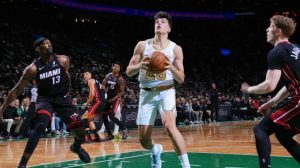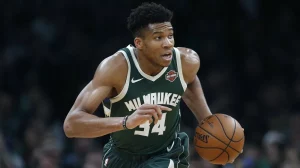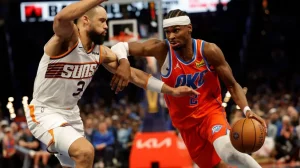
The NBA’s financial landscape took another massive leap this summer when Shai Gilgeous-Alexander and Devin Booker inked contract extensions that will see both stars earning an estimated $75 million in the 2030-31 season — the final year of their respective deals. The eye-popping figures instantly sparked debate, especially when contrasted with what elite athletes earn in other major American sports.

To put things into perspective, Santi Aldama, a role player for the Memphis Grizzlies, is now set to earn roughly the same annual salary as NFL star Travis Kelce and MLB home run leader Cal Raleigh. In 2024-25, the average NBA salary was nearly $12 million, compared to just $3 million in the NFL — a disparity largely driven by smaller rosters and greater per-player value in the NBA.
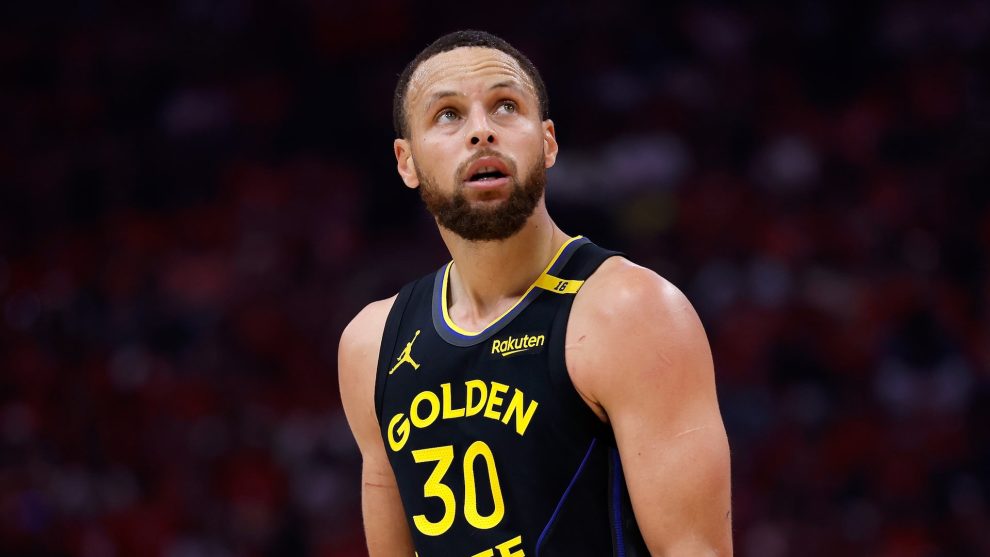
And yet, Stephen Curry, the NBA’s highest-paid player for now at nearly $60 million per year, believes NBA players are still underpaid.
Speaking with Complex’s Speedy Morman, Curry explained that player contracts — while massive in raw dollar value — don’t reflect the full revenue picture, particularly because players are prohibited from owning equity stakes in their teams while active, a restriction outlined in the NBA’s Collective Bargaining Agreement (CBA).
“Those numbers sound crazy, but what the league is doing… is probably 10 times that,” Curry said. “The idea that we can’t participate in equity while we’re playing is part of why I would say yes, we are underpaid… We want to be able to participate in that rise.”
Curry’s comments hint at a broader conversation around the distribution of value in the NBA, where players generate billions in revenue, but are restricted from sharing in the exponential growth of team valuations.
The impact of that restriction is even clearer when looking at how team values have soared. In 2000, Forbes ranked the New York Knicks as the NBA’s most valuable franchise at $395 million. Fast forward to 2025, and the Los Angeles Lakers were sold for a staggering $10 billion. The Golden State Warriors, once a $168 million franchise, are now worth an estimated $8.8 billion, thanks in no small part to Curry’s era of success.
Curry is advocating for future players to have the opportunity to gain equity while still active, something that has previously only happened after retirement — as in the case of David Robinson, who purchased a stake in the Spurs in 2004 after his playing days were over.
“Hopefully, sooner than later, those rules change a little bit so that players can participate more in the upside of team equity,” Curry added. “We deserve it.”
As salaries soar and team values skyrocket, the conversation around what players truly deserve is no longer just about the numbers in their contracts — it’s about the share of the business itself.