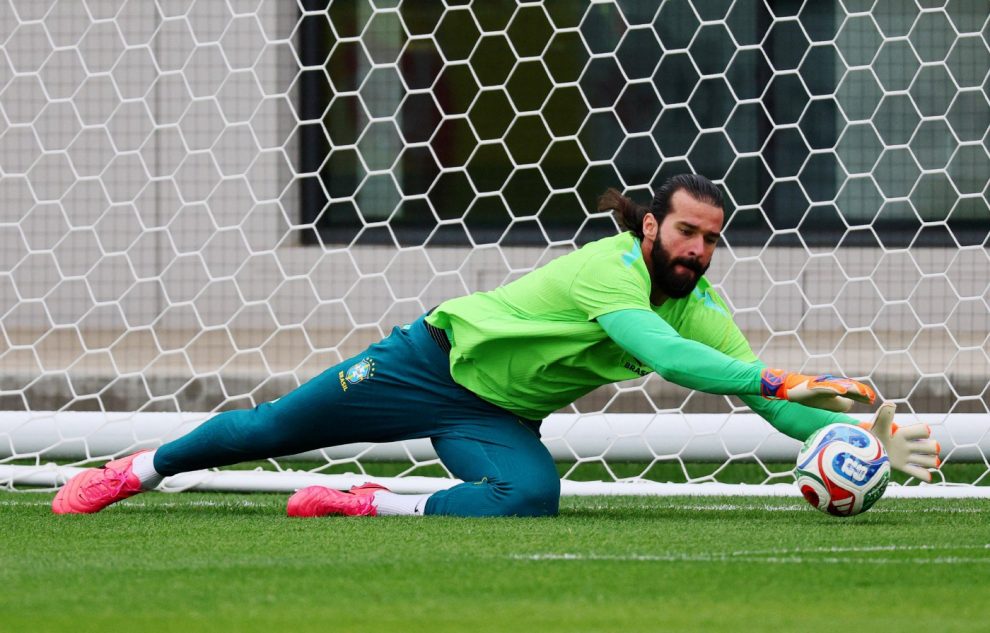
When Brazil face Scotland in their final World Cup Group C match on Wednesday, goalkeeper Alisson Becker will wear a green kit rather than the red uniform initially approved by FIFA — a decision that has reignited political debate in Brazil.

While a goalkeeper jersey change would normally attract little attention, the issue carries greater significance in Brazil, where the national team’s colours have become closely intertwined with political identity in recent years.
Brazil’s iconic yellow and green colours were heavily adopted by supporters of former president Jair Bolsonaro during political rallies and campaigns. Following Bolsonaro’s defeat in the 2022 election to current president Luiz Inácio Lula da Silva, debates over national symbols and colours have remained a prominent topic in Brazilian politics.
Before the tournament, FIFA’s official goalkeeper kit allocation listed Alisson in an all-red uniform for Brazil’s clash with Scotland. However, that option was later replaced by a green kit, with Brazilian Football Confederation (CBF) president Samir Xaud explaining that the federation preferred to prioritise colours associated with Brazil’s national flag.
According to Xaud, discussions regarding the red kit had taken place months earlier, with the federation requesting that Nike remove the design from its plans. He insisted the decision was not politically motivated but was instead intended to emphasise Brazil’s traditional national colours.
The CBF later clarified that while a red goalkeeper kit had been submitted as one of four required options to FIFA, it was never released commercially and was not part of Nike’s official collection for the World Cup.
The controversy reflects a broader cultural divide within Brazil, where football shirts have increasingly become political symbols. Some Brazilians avoid wearing the traditional yellow and green jersey because of its association with Bolsonaro’s movement, while others have embraced unofficial red versions featuring national team imagery.
Earlier this month, Lula called on supporters to reclaim Brazil’s national colours, arguing that yellow and green should represent the entire country rather than any political group.
As Brazil continue their World Cup campaign, even a goalkeeper’s choice of shirt colour has become a reminder of how deeply football and politics remain connected in one of the sport’s most passionate nations.